The Table of the Presence is one of three pieces of furniture located in the Holy Place.
“You shall make a table of acacia wood, two cubits long, one cubit wide, and a cubit and a half high.
And you shall set the bread of the Presence on the table before me continually (Exodus 25:23, 30).
This table, with its bread, represents two aspects of the same truth: First, it stands before God, constantly reminding Israel of their perpetual openness to God’s all-seeing eye and divine protection.
Second, it is in this very place that the priests serve and receive their bread. This bread foreshadows Jesus, who referred to himself in John 6 as the bread that came down from heaven to give men and women everlasting bread.
Below is an AI-generated picture, giving you an idea of what the Table may have looked like.
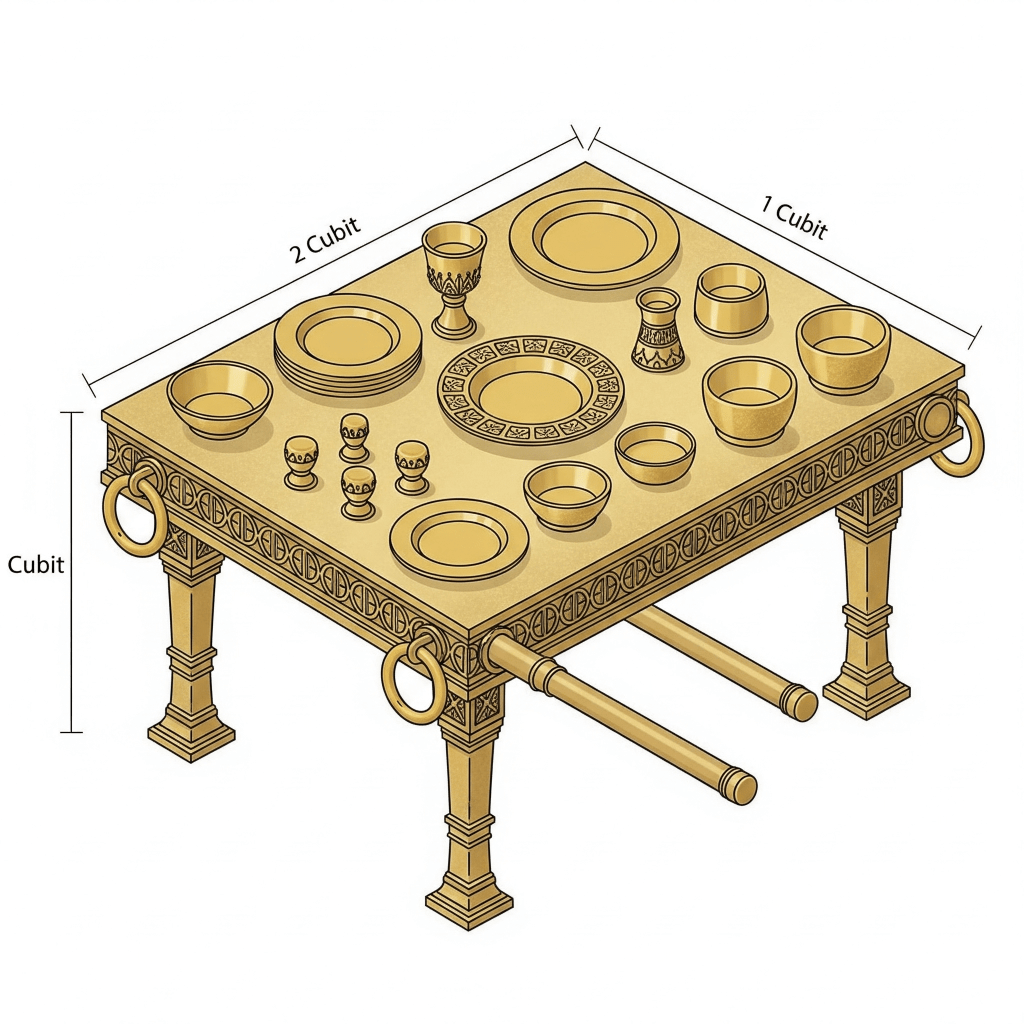
The plates and dishes were not used to serve God food, as was the practice in pagan temples. Instead, sacrifices to God were simply meant as offerings to Him.
Just as the Bread of the Presence supplied the needs of the priests on the Sabbath in the Holy Place, so Jesus meets the needs of His followers.
Jesus said to them, “I am the bread of life. Whoever comes to me will never be hungry, and whoever believes in me will never be thirsty” (John 6:35).
The Lampstand
The third article in the Holy Place is the golden lampstand. Central to the teachings of the Tabernacle is the understanding that God is the light of the world. Therefore, wherever God dwells, there is light.
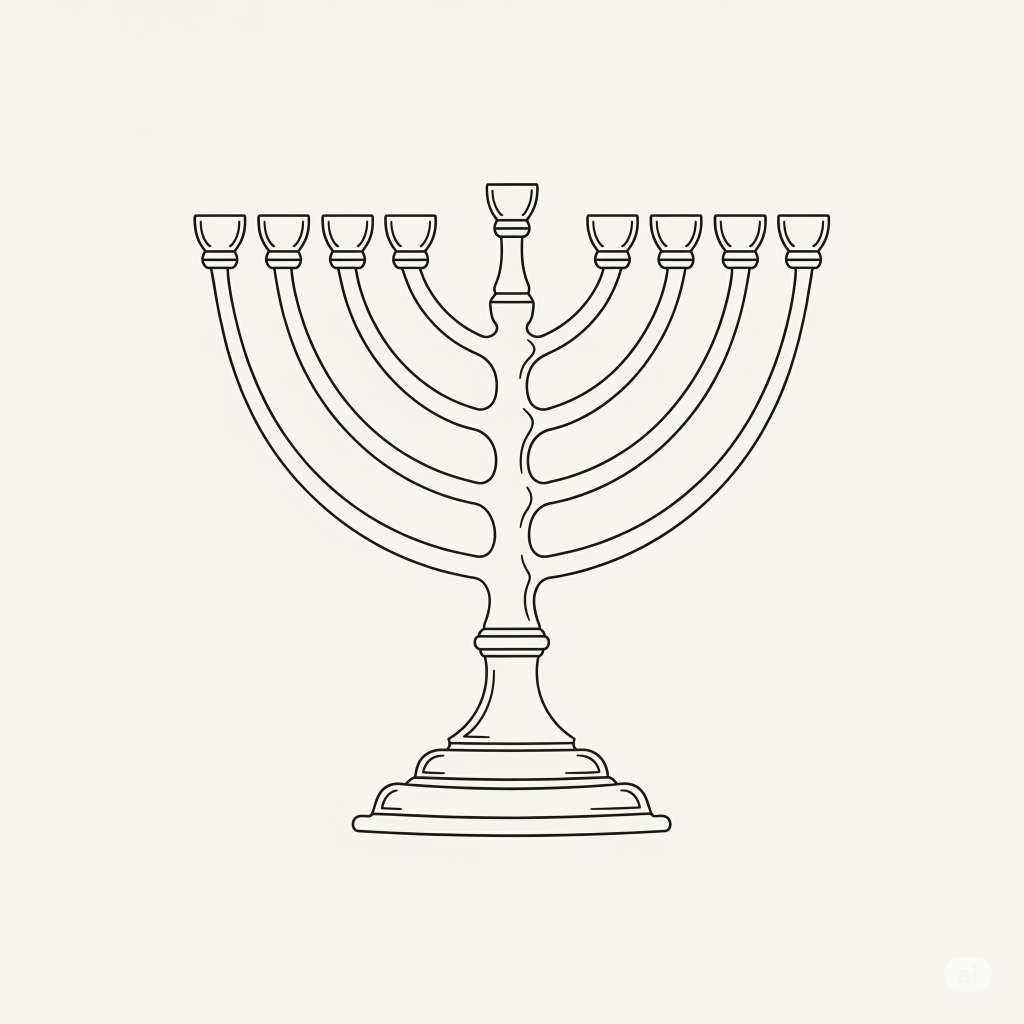
“You shall make a lampstand of pure gold. The base and the shaft of the lampstand shall be made of hammered work; its cups, its calyxes, and its petals shall be of one piece with it;
And there shall be six branches going out of its sides: three branches of the lampstand out of one side of it and three branches of the lampstand out of the other side of it” (Exodus 25:31-32).
Below is an AI-generated line drawing that shows some aspects of the lampstand. The actual lampstand was more ornate and detailed than the one in the drawing.
We do well to note verse 40, which serves as a key warning to all readers.
And see that you make them according to the pattern for them, which is being shown you on the mountain” (Exodus 25:40).
Moses was constructing only a model. God’s true dwelling place lies beyond this physical representation. Jesus alluded to this in one of His confrontations with the religious authorities.
Again Jesus spoke to them, saying, “I am the light of the world. Whoever follows me will never walk in darkness but will have the light of life” (John 8:12).
Curtains for the Tabernacle
As we consider the Tabernacle’s curtains, let’s remember Rudy Ross’s observations about its construction. The biblical text describes the Tabernacle from the inside out, reflecting God’s divine order.
While we approach the sanctuary from the exterior, the Lord’s design and plan always originate from within. Similarly, Jesus’s teachings, especially in the Sermon on the Mount, consistently focus on the inner life of humans.
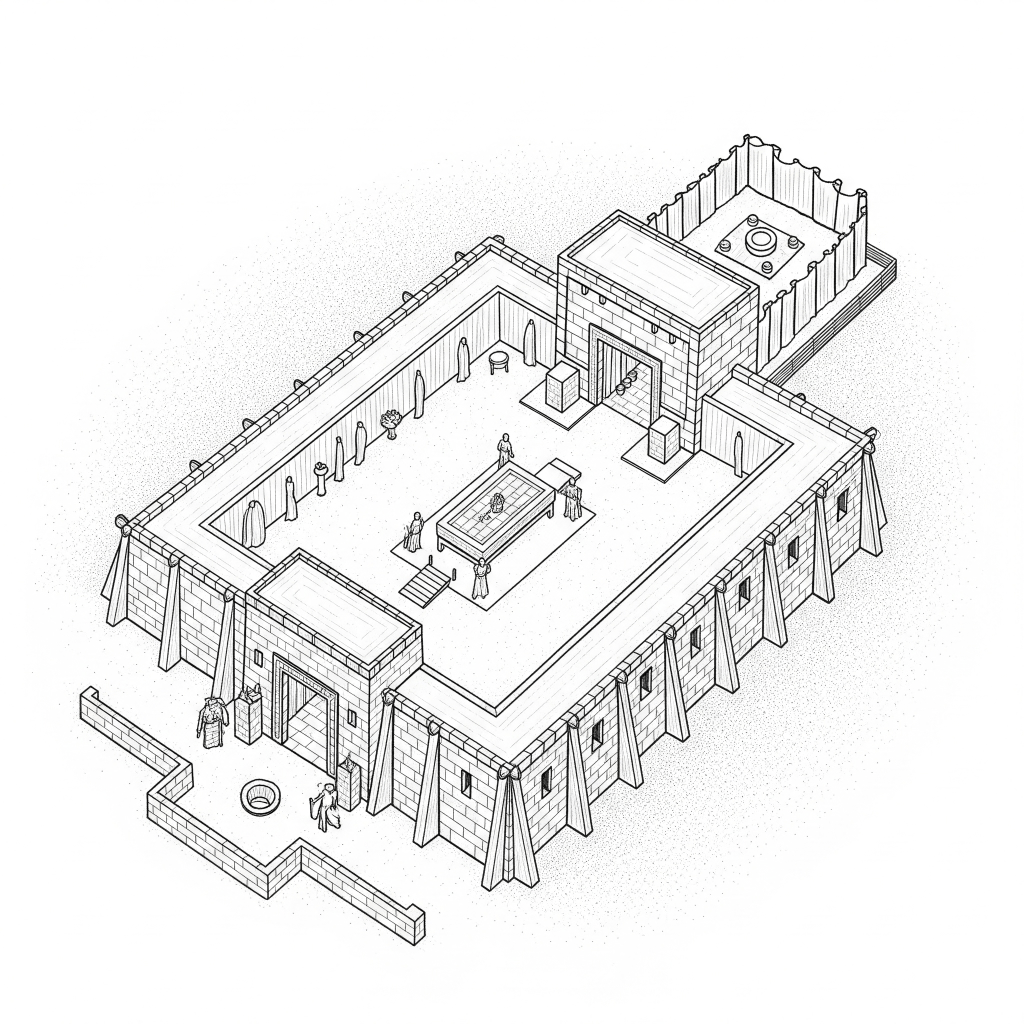
Below is an AI-generated view of the Tabernacle as seen from above. It doesn’t show the curtains but gives an idea of how the curtains were arranged.
I have been using Walter Kaiser’s commentary on Exodus to inform my writing about the Tabernacle. Kaiser has this to say about the various coverings used for the curtains of the Tabernacle:
“The covering of ram’s skins also recalls the sacrifice used in consecrating the priesthood, and it was deliberately dyed red, showing that the priesthood was set apart by blood.
“Finally, the protective covering of the sea cow’s hides marked the protective separation between the dwelling place of God and the world.”
Kaiser continues and notes that “the curtains were more important than the Tabernacle’s frame. The sacred space,” he writes, “must remain inviolate. The other objects mentioned in the secondary position were ancillary to this main concern of God.”
Reflections
The foundation for our life with God is vividly present in this passage. Consider Communion or the Lord’s Supper: where did its essence originate? It began here with the Bread of the Presence in the Tabernacle. Later, Jesus declared, “I am the bread of life” (John 6:35). When we commune with Him, we receive His gift of life into our bodies through the bread.
Now, consider God’s light. The lampstand signifies that God is present before us as light, and “in him there is no darkness at all” (1 John 1:5). Jesus proclaimed, “I am the light of the world” (John 8:12).
When we walk with Him, He illuminates our path and shows us the direction for life.
YouTube Discussion
Rudy Ross continues his explanation of the Tabernacle in today’s YouTube video. Please join Rudy Ross, Bruce Kirby, and me in this presentation.

